“ Understand your actions and the impact they have on others and honour your responsibility to ensure that impact is positive. ”
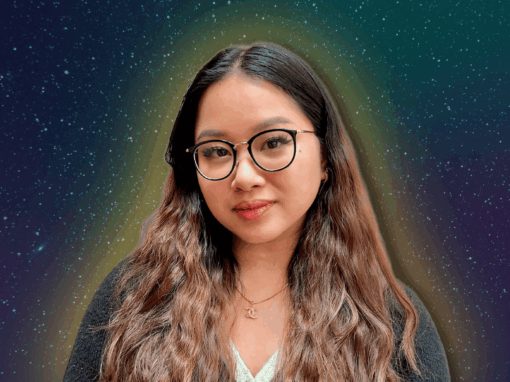
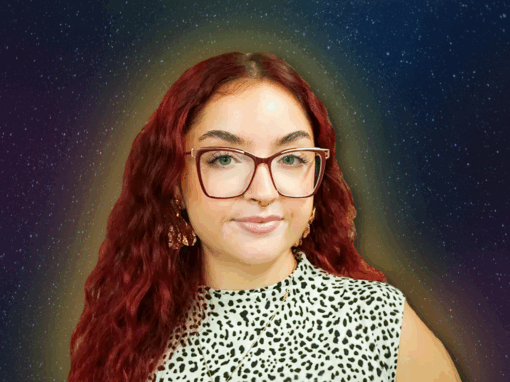
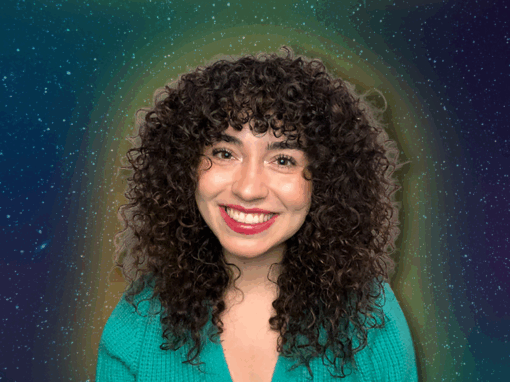
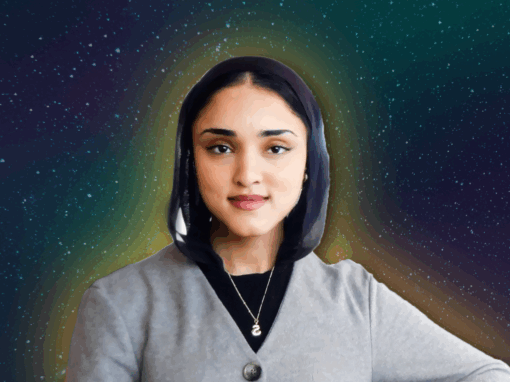
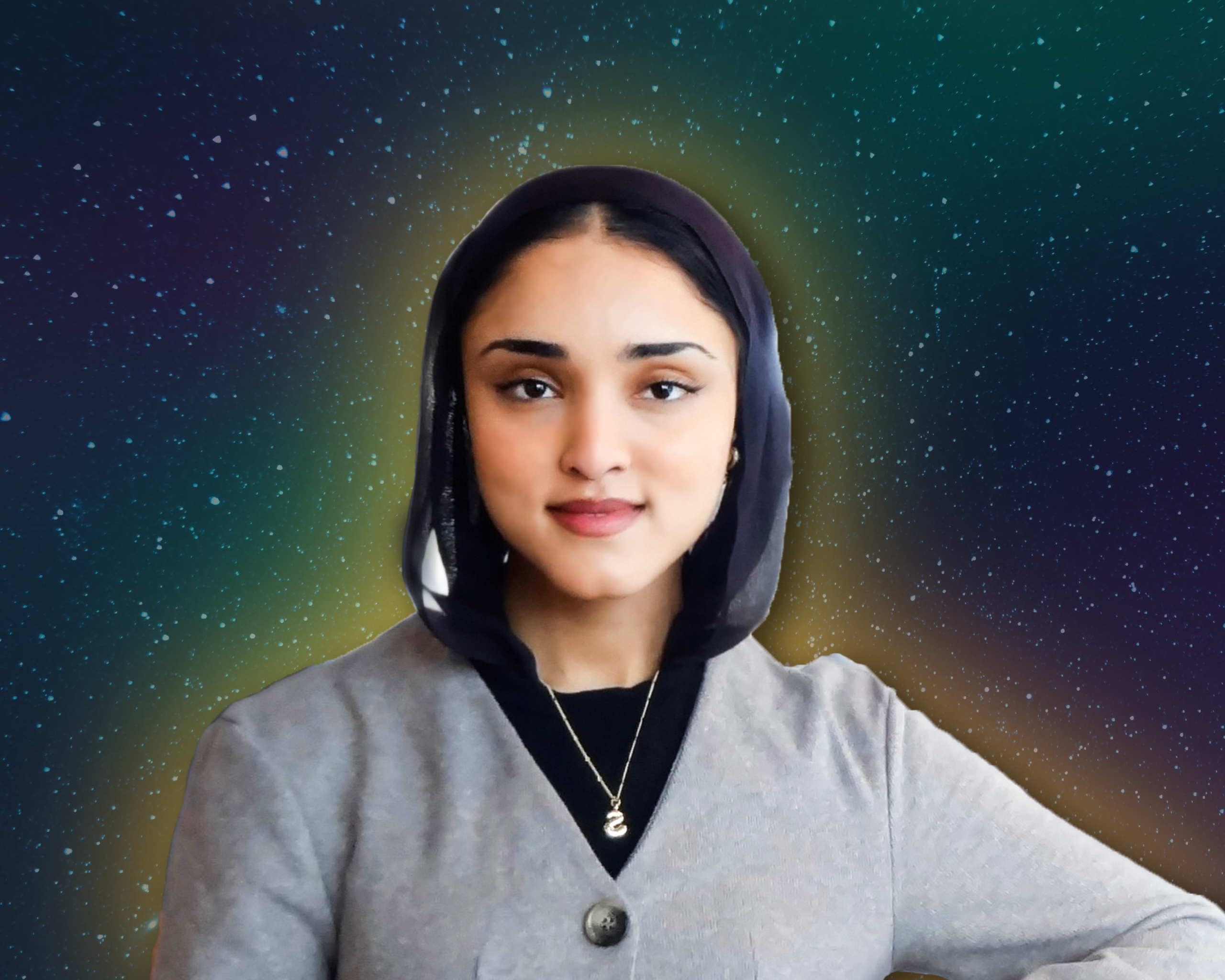
Shafaq Batool
TOP 30 UNDER 30 HONOUREE | 2026
About
PROFILE SNAPSHOT
AGE: 21
PRONOUNS: She/Her
HOMETOWN: Calgary, Alberta, Canada
CURRENT RESIDENCE: Calgary, Alberta, Canada
ORGANIZATIONS:
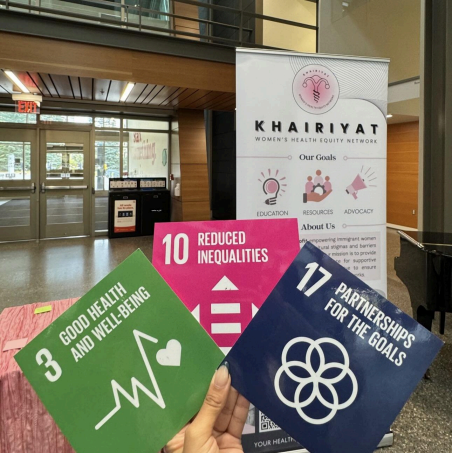
- Khairiyat Women’s Health Equity Network
- Canadian Commission for UNESCO
- Society of Teaching and Learning in Higher Education
GLOBAL IMPACT FOCUS (SDGs)
I am most passionate about:
What specific issue(s) are you working to address, and what motivates you to do so?
The issues I take on are rooted in the quiet conversations that unfolded behind closed doors in my community. The kinds of conversations shared in the safety of familiar kitchens, over chai, and in the trusted languages. Growing up, I never understood the tension between cultural preservation and assimilation, nor did I grasp the weight of the silence that governed women’s health discussions in my community. This was not only my experience, but those of many others caught between the identities inherited and the ones they were trying to construct.
When I joined the Youth Advisory Group for the Canadian Commission for UNESCO, this commitment became central to my work. Much of our mandate involves examining the architecture of advocacy itself and how youth are engaged in it — its patterns of inclusion and exclusion, and the way certain voices are elevated as ‘expert’ by default. Over time, I recognized that the language of advocacy often relies on academic or policy frameworks that alienate the very communities it claims to uplift. My role at CCUNESCO pushed me to challenge that habit of speaking about people rather than with them, and to design youth-engagement frameworks that refused to replicate those barriers.
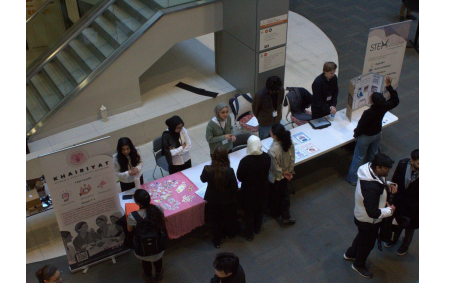
Co-founding Khairiyat was my first concrete step in addressing the health inequities directly. Over time, seeing Khairiyat become a space where conversations could breathe and connections could be made was empowering and a testament to intention in uplifting communities. It was about assembling the community that already exists to gather in conversation about health and wellness. This was represented when Khairiyat supported the Catalyst Health Innovation Sprint hosted at the University of Calgary to support the next leaders for health innovation to center health equity in their work.
My advocacy now extends into transforming the structures that govern education itself. As a 2025 3M National Student Fellow, I work on a national project with my cohort examining how interdisciplinary university programs are designed, funded, and experienced, with the goal of improving access to inclusive, decolonial learning pathways. This work speaks directly to exposing how traditional academic structures exclude first-generation, immigrant, and racialized students by devaluing community knowledge, non-linear educational trajectories, and collaborative leadership models.
Across all of this work, the motivation remains the same: a belief that people deserve to be part of the conversations that affect them, and a recognition that inclusion doesn’t happen by default. Someone has to build the structures, adjust the language, open the doors, and sometimes dismantle the room entirely and rebuild it differently. I’ve come to understand that this is the role I can play. The principle guiding me is the awareness that my actions and decisions hold impact. It reminds me that leadership is about ensuring others are not silenced.
Together, these efforts advance SDG 3, 4, 5, 10, and 17 by addressing health inequities, reimagining educational structures, challenging systemic exclusions, and strengthening collaborative pathways for meaningful participation.
What are the ways in which you curate connection?
I curate connection by building spaces where people feel safe enough to speak in their own language both literally and figuratively. Much of my work emerges from recognizing that trust is earned long before any “initiative” begins. With Khairiyat, this has meant starting with conversations in family and friends, in community centres, youth programs, and cultural groups, asking women and girls what they need rather than presuming I already know. The stakeholders in this work are layered: immigrant and newcomer families, cultural community leaders, youth program coordinators, health-care providers, and the young women who guide our programming from within their own lived experience.
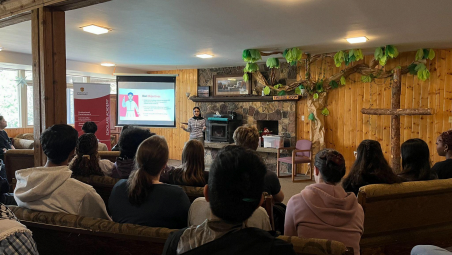
My job is not to stand at the front but to design systems that move people to the centre. I balance my own passion with community needs by treating every project as iterative. Workshops, for example, are co-created with youth facilitators and adaptedeach time based on what participants tell us from what felt uncomfortable, what felt empowering, and what they wish someone had explained to them years earlier. At CCUNESCO, this approach extends to youth governance. Along with other youth advisors, I have pushed for frameworks that replace token consultation with genuine co-decision-making so that advocacy is shaped by those most affected, such as when we redesigned the Youth Mandate as a part of the Governance Committee.
Ultimately, curating connection means creating conditions where people can lead their own narratives, and I see my role as clearing the path for that to happen.
What role will connection play in your future work?
Connection will shape every horizon I move toward. In development work, it is the thread that holds the whole fabric together. Policy, programming, and strategy all fall flat when they are untethered from the people they claim to serve.
In my future work, connection will function as a form of accountability. It forces me to remember that what I build belongs to the communities who will inherit it. Durable change comes from relationships rooted in reciprocity.
To harness the power of connection is to design in ways that outlive any single advocate. It is to create pathways rather than projects, to build structures that others can step into and reshape long after I am gone. These are the connections that make development work feel less like intervention and more like stewardship.
I believe connection can drive the future of sustainable, inclusive development because it restores something that large systems often forget: dignity. When people see themselves reflected in the decisions around them, they commit to the work. When we build alongside communities rather than around them, our efforts stop dissolving at the end of a funding cycle and instead take root.
Connection is, and will continue to be, the quiet force that turns intention into lasting change.
More Top 30s from 2026